
From Zero to Hello World on Ubuntu Linux#
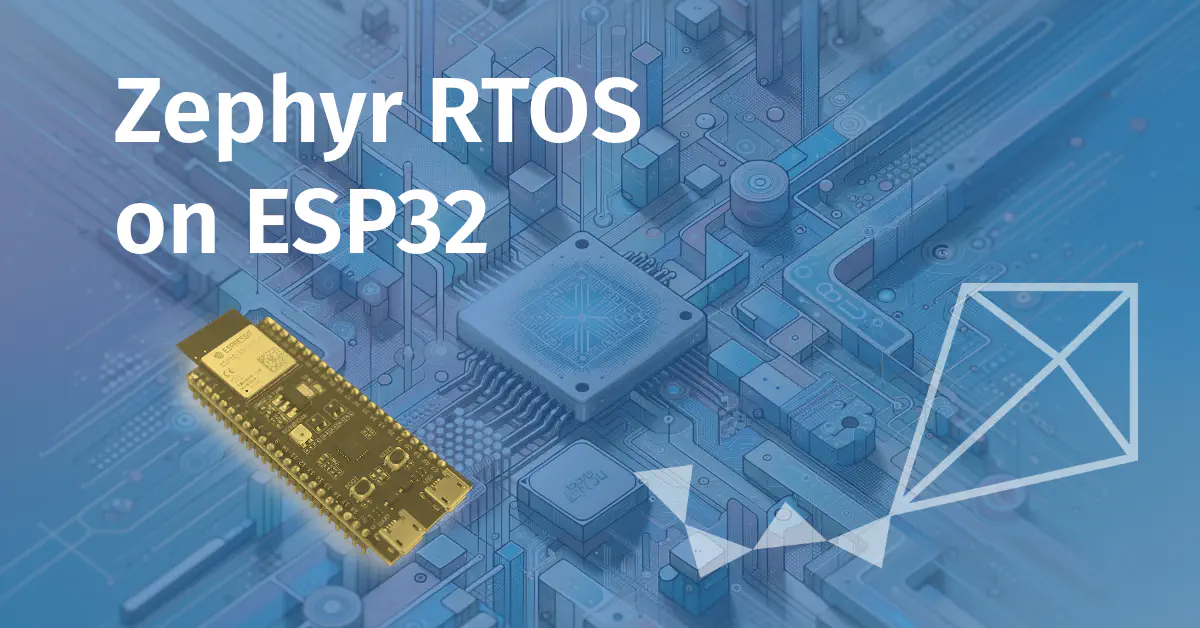
Written for absolute beginners. Every error encountered, every fix applied , documented step by step. Tested on: Ubuntu 24.04 | ESP32 DevKitC | Zephyr v4.2.0 | SDK 0.17.0
What is Zephyr?#
Zephyr is a real-time operating system (RTOS) for embedded devices - think microcontrollers, IoT sensors, smart devices. It is developed under the Linux Foundation and is used in professional embedded systems worldwide.
Why learn Zephyr as a beginner?#
| Skill Learned in Zephyr | Same Skill Used in Linux Kernel |
|---|---|
Device Tree (.dts files) | ✅ Identical concept |
Kconfig (.conf files) | ✅ Identical concept |
| CMake build system | ✅ Similar |
| Kernel threads & scheduling | ✅ Core Linux concept |
| Submitting patches via Git | ✅ Same workflow |
Zephyr is the perfect training ground before diving into Linux kernel development.
What You Need#
- A laptop/PC running Ubuntu (20.04, 22.04, or 24.04)
- An ESP32 DevKitC board (the black board with WiFi+BT)
- A micro-USB cable
- Internet connection
- ~10GB of free disk space
⚠️ Check disk space first! Zephyr + SDK needs ~8GB.
df -h /You need at least 10GB free in the
Availcolumn.
Step 1 - Install System Dependencies#
Open a terminal and run:
sudo apt update
sudo apt install --no-install-recommends \
  git cmake ninja-build gperf \
  ccache dfu-util device-tree-compiler wget \
  python3-dev python3-pip python3-setuptools \
  python3-tk python3-wheel \
  xz-utils file make gcc gcc-multilib \
  g++-multilib libsdl2-dev libmagic1
This takes 3–5 minutes depending on your connection.
Verify#
cmake --version   # Should show 3.x.x
python3 --version # Should show 3.x.x
git --version     # Should show 2.x.x
Step 2 - Install West#
West is Zephyr’s meta-tool for managing source code, building, and flashing. Install it using pipx (the modern, clean way):
sudo apt install pipx
pipx install west
pipx ensurepath
source ~/.zshrc   # or: source ~/.bashrc  (if you use bash)
Verify#
west --version
# Expected output: west, version 1.5.0 (or similar)
💡 Why pipx and not pip?
pipxinstalls tools in isolated environments, preventing conflicts with other Python packages on your system.
Step 3 - Download Zephyr Source#
cd ~
west init zephyrproject
cd zephyrproject
west update
⚠️
west updatetakes 10–20 minutes. It downloads the entire Zephyr source tree (~2GB). Just let it run.
What these commands do#
west init- creates thezephyrprojectfolder and fetches the manifestwest update- downloads all the Zephyr modules defined in the manifest
Step 4 - Set Up Python Virtual Environment#
Zephyr’s build scripts need specific Python packages. We use a virtual environment to keep things clean:
cd ~
python3 -m venv zephyr-env
source ~/zephyr-env/bin/activate
pip install -r ~/zephyrproject/zephyr/scripts/requirements.txt
You should now see (zephyr-env) at the start of your terminal prompt.
⚠️ Important: You need to activate the venv every time you open a new terminal:
source ~/zephyr-env/bin/activate
Inject required packages into West’s Python environment#
West uses its own Python (via pipx), separate from your venv. Inject these packages:
pipx inject west pyserial intelhex pyelftools cmake
💡 These are needed for flashing and building - you’ll get errors without them (see Errors Reference).
Step 5 - Download and Install Zephyr SDK#
The Zephyr SDK contains compilers and tools for all supported architectures, including Xtensa (ESP32).
cd ~
wget https://github.com/zephyrproject-rtos/sdk-ng/releases/download/v0.17.0/zephyr-sdk-0.17.0_linux-x86_64.tar.xz
tar xf zephyr-sdk-0.17.0_linux-x86_64.tar.xz
cd zephyr-sdk-0.17.0
./setup.sh
When setup.sh asks questions:
- Install host tools? → type
yand press Enter - Register Zephyr SDK CMake package? → type
yand press Enter
The download is ~1.6GB and takes 5–10 minutes.
Set the SDK path (required for building)#
export ZEPHYR_SDK_INSTALL_DIR=~/zephyr-sdk-0.17.0
⚠️ Add this to your
~/.zshrcor~/.bashrcso you don’t need to run it every time:echo 'export ZEPHYR_SDK_INSTALL_DIR=~/zephyr-sdk-0.17.0' >> ~/.zshrc
Switch Zephyr to a stable version compatible with SDK 0.17.0#
The latest Zephyr (main branch) requires SDK 1.0+. Switch to the stable v4.2.0 release:
cd ~/zephyrproject/zephyr
git checkout v4.2.0
west update
Step 6 - Build Hello World#
Now let’s compile the Hello World sample for the ESP32:
source ~/zephyr-env/bin/activate
export ZEPHYR_SDK_INSTALL_DIR=~/zephyr-sdk-0.17.0
cd ~/zephyrproject/zephyr
west build -p always -b esp32_devkitc/esp32/procpu samples/hello_world
What each flag means#
| Flag | Meaning |
|---|---|
-p always | Clean build every time (pristine) |
-b esp32_devkitc/esp32/procpu | Target board: ESP32 DevKitC, main CPU |
samples/hello_world | The sample to build |
Success looks like#
[211/211] Linking C executable zephyr/zephyr.elf
Memory region   Used Size  Region Size  %age Used
FLASH:         144440 B   4194048 B     3.44%
...
Successfully created esp32 image.
Step 7 - Flash to ESP32#
First, fix USB permissions (required on Ubuntu, only needed once):
sudo usermod -a -G dialout $USER
# Log out and back in for this to take effect
# OR use this temporary fix:
sudo chmod 666 /dev/ttyACM0
Then flash:
west flash --esp-device /dev/ttyACM0
💡 If your device appears as
/dev/ttyUSB0instead, use that:west flash --esp-device /dev/ttyUSB0
💡 Find your device port:
ls /dev/tty* | grep -E "ACM|USB"
💡 If upload fails, hold the BOOT button on your ESP32 while flashing.
Step 8 - View Output#
Open the serial monitor to see your program’s output:
west espressif monitor --port /dev/ttyACM0
You should see#
*** Booting Zephyr OS build v4.2.0 ***
Hello World! esp32_devkitc/esp32/procpu
You are now running Zephyr RTOS on your ESP32.
Press
Ctrl+]to exit the serial monitor.
❌ Errors & Fixes Reference#
Every error encountered during this setup, and exactly how to fix each one.
❌ Error: No space left on device#
fatal: write error: No space left on device
Cause: Your disk is full.
Fix:
df -h /                          # Check available space
du -sh ~/* | sort -rh | head -10 # Find what's using space
Free up space before continuing. Zephyr needs ~8GB.
❌ Error: dlopen(): error loading libfuse.so.2#
AppImages require FUSE to run.
Cause: FUSE library missing (needed for AppImage format).
Fix:
sudo apt install libfuse2
❌ Error: source: no such file or directory: /home/.../zephyr-env/bin/activate#
Cause: The virtual environment wasn’t created yet, or you’re in the wrong directory.
Fix:
cd ~
python3 -m venv zephyr-env
source ~/zephyr-env/bin/activate
❌ Error: Missing jsonschema dependency (CMake)#
CMake Error: Missing jsonschema dependency
Cause: West uses its own Python environment (via pipx) which doesn’t have jsonschema.
Fix:
pipx inject west jsonschema
❌ Error: No board named 'esp32_devkitc_wroom' found#
No board named 'esp32_devkitc_wroom' found. Did you mean:
  esp32_devkitc
  esp32s3_devkitc
Cause: Wrong board name used.
Fix: Use the correct board target:
west build -p always -b esp32_devkitc/esp32/procpu samples/hello_world
❌ Error: Board qualifiers 'esp32' for board 'esp32_devkitc' not found#
Valid board targets for esp32_devkitc are:
  esp32_devkitc/esp32/procpu
  esp32_devkitc/esp32/appcpu
Cause: Need to specify the full board target with qualifiers.
Fix:
west build -p always -b esp32_devkitc/esp32/procpu samples/hello_world
❌ Error: Could not find Zephyr-sdk compatible with version "1.0"#
Could not find a configuration file for package "Zephyr-sdk"
compatible with requested version "1.0".
Cause: You’re on the bleeding-edge main branch of Zephyr which requires SDK 1.0, but SDK 0.17.0 is installed.
Fix: Switch to the stable Zephyr release:
cd ~/zephyrproject/zephyr
git checkout v4.2.0
west update
export ZEPHYR_SDK_INSTALL_DIR=~/zephyr-sdk-0.17.0
❌ Error: ModuleNotFoundError: No module named 'elftools'#
ModuleNotFoundError: No module named 'elftools'
Cause: pyelftools not installed in West’s Python environment.
Fix:
pipx inject west pyelftools
❌ Error: ModuleNotFoundError: No module named 'intelhex'#
ModuleNotFoundError: No module named 'intelhex'
Cause: intelhex not installed in West’s Python environment.
Fix:
pipx inject west intelhex
❌ Error: ModuleNotFoundError: No module named 'serial'#
Pyserial is not installed. ModuleNotFoundError: No module named 'serial'
Cause: pyserial not installed in West’s Python environment.
Fix:
pipx inject west pyserial
💡 Pro tip: Install all commonly missing modules at once to avoid hitting these one by one:
pipx inject west pyserial intelhex pyelftools cmake
❌ Error: Path '/dev/ttyACM0' is not readable#
Invalid value for '--port' / '-p': Path '/dev/ttyACM0' is not readable.
Cause: Your user doesn’t have permission to access the USB serial port.
Fix (temporary):
sudo chmod 666 /dev/ttyACM0
Fix (permanent):
sudo usermod -a -G dialout $USER
# Then log out and back in
❌ Error: Blinky sample fails - undeclared __device_dts_ord#
error: '__device_dts_ord_DT_N_ALIAS_led0_P_gpios_IDX_0_PH_ORD' undeclared
Cause: The ESP32 DevKitC board definition in Zephyr doesn’t have an LED alias in its device tree. The blinky sample requires an led0 alias to be defined.
Status: This is a known gap and a potential first contribution to the Zephyr project.
Workaround: Use hello_world sample instead:
west build -p always -b esp32_devkitc/esp32/procpu samples/hello_world
Proper fix (contribution opportunity): Add an LED definition to the board’s .dts file at:
~/zephyrproject/zephyr/boards/espressif/esp32_devkitc/esp32_devkitc_procpu.dts
Daily Workflow Cheatsheet#
Every time you open a new terminal to work with Zephyr:
# 1. Activate Python environment
source ~/zephyr-env/bin/activate

# 2. Set SDK path
export ZEPHYR_SDK_INSTALL_DIR=~/zephyr-sdk-0.17.0

# 3. Go to Zephyr directory
cd ~/zephyrproject/zephyr

# 4. Build
west build -p always -b esp32_devkitc/esp32/procpu samples/hello_world

# 5. Fix USB permission (if needed)
sudo chmod 666 /dev/ttyACM0

# 6. Flash
west flash --esp-device /dev/ttyACM0

# 7. Monitor
west espressif monitor --port /dev/ttyACM0
💡 Save time: Add steps 1 and 2 to your
~/.zshrcso they run automatically:echo 'source ~/zephyr-env/bin/activate' >> ~/.zshrc echo 'export ZEPHYR_SDK_INSTALL_DIR=~/zephyr-sdk-0.17.0' >> ~/.zshrc
Next Steps#
Now that your environment is working, here’s a learning path toward contributing to Zephyr and eventually Linux kernel development:
Beginner (Now)#
- Explore other samples in
~/zephyrproject/zephyr/samples/ - Read Zephyr’s Getting Started Guide
- Join Zephyr’s Discord
Intermediate (1–3 months)#
- Understand Device Tree - edit a
.dtsfile - Fix the LED alias issue on ESP32 DevKitC (first contribution!)
- Look for Good First Issues on GitHub
Advanced (3–6 months)#
- Write a simple Zephyr driver
- Submit a pull request to Zephyr upstream
- Explore Linux kernel modules on Raspberry Pi
Expert (6–12 months)#
- Apply for GSoC 2027 with the Linux Foundation / Zephyr project
- Contribute to Linux kernel via
git send-email
Useful Resources#
| Resource | Link |
|---|---|
| Zephyr Docs | https://docs.zephyrproject.org |
| Zephyr GitHub | https://github.com/zephyrproject-rtos/zephyr |
| ESP32 in Zephyr | https://docs.zephyrproject.org/latest/boards/espressif/esp32_devkitc/doc/index.html |
| Zephyr Discord | https://discord.com/invite/Ck7jw53nU2 |
| GSoC 2026 Zephyr Projects | https://github.com/LinuxFoundationGSoC/ProjectIdeas/wiki/GSoC-2026-Zephyr |
| West Tool Docs | https://docs.zephyrproject.org/latest/develop/west/index.html |
Guide written on March 18, 2026 - based on real setup session from scratch on Ubuntu 24.04